
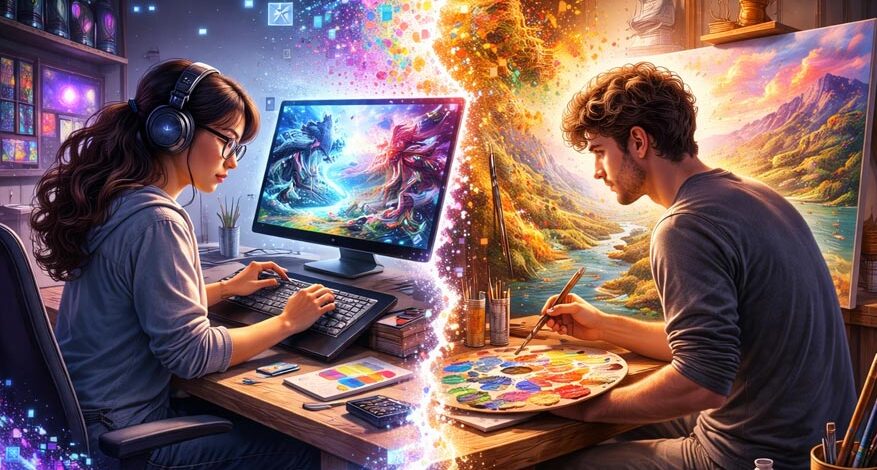
Digital Art vs. Traditional Art: Finding Balance in a Changing Creative World
There’s a quiet debate echoing through the art community these days — digital art vs. traditional art. Some artists see digital art as a shortcut, while others praise it as a revolutionary tool that’s expanding creativity. So, who’s right? And why does this conversation stir up so much emotion?
The truth is, both forms of art hold incredible value. As technology has evolved, digital art has become deeply intertwined with industries like animation, photography, film, and graphic design. Yet, there’s still a lingering perception that it’s “less real” — that clicking on a screen can’t possibly compare to holding a brush or molding clay.
But let’s pause for a second. Once upon a time, even photography was dismissed as “not real art.” Now, it hangs proudly in galleries and sells for millions. Art, like everything else, evolves — and our definitions of it should, too. Whether we’re talking about oil paint or pixels, what truly matters is the creative eye and heart behind the work.
So, instead of asking which is better, let’s explore the pros and cons of digital vs. traditional art and see what each has to offer.
The Advantages of Digital Art
- Accessibility and Affordability
For many aspiring artists, digital art is simply more practical. Most people already own a tablet, laptop, or phone with a touchscreen. Compared to constantly buying canvases, brushes, paints, or clay, a digital setup can actually be more affordable in the long run.
Sure, devices eventually age or break, but that’s often cheaper than restocking physical supplies over and over. For students or hobbyists on a budget, digital painting and drawing can be a lifesaver.
- Convenience and Portability
One of the biggest perks of digital art is how portable it is. No bulky easels, messy paint tubes, or fragile canvases — just grab your tablet, and your entire studio fits inside your backpack. Whether you’re sketching in a café or animating on a flight, digital tools make creativity mobile in ways traditional mediums can’t.
- Instant Sharing and Exposure
In today’s connected world, being able to share your work instantly is powerful. Digital art lives online — a few taps and your creation can reach audiences across the world. You can post to social media, send it to clients, or even sell it as an NFT within minutes.
Traditional art can, of course, be photographed — but it never quite captures the same clarity, color, or presence as the original digital file.
- Flexibility and Speed
Here’s one every artist secretly loves: the “Undo” button. With digital tools, mistakes aren’t disasters — they’re just one tap away from being erased. You can experiment endlessly without worrying about wasting materials or ruining a piece.
This flexibility lets artists work faster, iterate freely, and explore ideas they might not have risked on a physical canvas.
The Beauty of Traditional Art
- True Originality
Every piece of traditional art is one-of-a-kind. There’s something profoundly human about seeing the texture of brushstrokes or the depth of a pencil line that no screen can replicate. A painting or sculpture carries the artist’s physical touch — their movements, pressure, and even imperfections — making it deeply personal and irreplaceable.
- Sensory Connection
Traditional art engages all the senses. The smell of paint, the feel of charcoal dust, the sound of brushes scraping the canvas — it’s a full-bodied experience. That tactile connection helps artists feel grounded in their work and often sparks deeper emotional flow.
- Versatility of Mediums
Traditional art gives you freedom to mix and layer — from oils and acrylics to clay and collage. The textures and depth you can create are physically tangible, something digital art still struggles to fully replicate. Each stroke, smudge, or layer of paint adds richness that the eye and hand both appreciate.
- No “Undo” Button — and That’s a Good Thing
In traditional art, every decision counts. You can’t instantly erase or adjust — and that challenge teaches patience, discipline, and confidence. Many artists say it’s in those irreversible moments that their true style and intuition shine through.
The Truth: It’s Not a Competition
At the end of the day, digital art and traditional art aren’t enemies — they’re partners in a constantly evolving creative landscape. One isn’t “better” than the other; they simply offer different experiences and outcomes.
The smartest artists today often blend both worlds — sketching traditionally, then enhancing their work digitally. By embracing both mediums, you can modernize your techniques, broaden your skills, and connect with wider audiences without losing touch with your roots.
Art will always be about expression, not the tools you use. Whether it’s brushstrokes on canvas or pixels on a screen, what truly matters is the story you’re telling and the feeling you leave behind.
Final Thoughts
So, digital vs. traditional art isn’t really a battle — it’s a conversation about creativity and evolution. Traditional art will always hold its timeless charm, while digital art continues to open new doors for innovation.
The future of art lies in balance — where technology enhances tradition, not replaces it. Pick up your brush or your stylus, and just create. After all, art is less about how you make it and more about why you do.