
Art in the Age of AI: Is Digital Replication Replacing Traditional Art Forms?
Artificial intelligence has become one of the most talked-about forces shaping today’s creative world. From painters and sculptors to photographers and designers, everyone’s asking the same question: Is AI art replacing traditional art, or is it simply expanding what creativity can mean?
As AI-generated art continues to dominate conversations in galleries, on social media, and across digital marketplaces, it’s clear that technology and creativity have entered a new era — one filled with both inspiration and tension.
When Technology Meets Tradition
Throughout history, new technologies have always challenged traditional art forms. When photography first appeared, many feared it would destroy painting. When digital art emerged, critics dismissed it as “not real art.” Now, with AI art generators like DALL-E, Midjourney, and Runway ML, we’re witnessing a familiar story—but on a whole new scale.
Many well-known traditional and digital artists have spoken out against AI-generated art, raising valid concerns about copyright infringement, creative ownership, and fair compensation.
Artists like Karla Ortiz, Sarah Andersen, and Kelly McKernan have filed lawsuits against major AI companies such as Stability AI, Midjourney, and DeviantArt, arguing that these platforms were trained on millions of copyrighted images without artists’ consent.
Fantasy illustrator Greg Rutkowski, whose distinctive visual style has been widely imitated by AI, has also criticized the way AI systems borrow from existing art without proper attribution. Likewise, renowned creators like Hayao Miyazaki and Guillermo del Toro have expressed deep concern about how artificial intelligence in art might devalue the human spirit behind creativity.
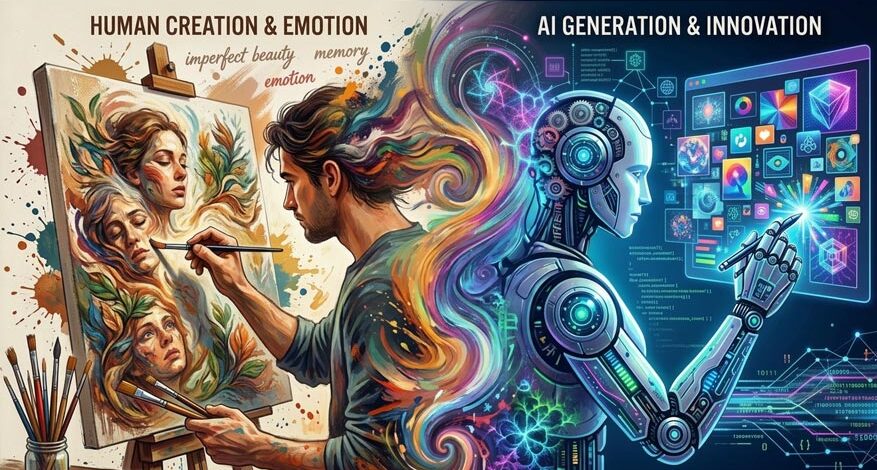
Their message is clear: art isn’t just about the final image — it’s about emotion, memory, and the imperfect beauty of the human hand.
AI Art’s Allure — and Its Complications
Even with controversy surrounding it, there’s no denying the allure of AI-generated art. These tools can create breathtaking visuals in seconds, allowing anyone to bring an idea to life without years of technical training. For many creators, this accessibility feels empowering — a way to explore creativity beyond traditional limitations.
But it also raises an important question: when an algorithm can produce an oil painting or digital portrait that looks as if it came from a master’s hand, where does originality begin and imitation end?
The answer might not be so black and white. Throughout history, art and technology have always evolved together. The invention of the paint tube allowed Impressionists to paint outdoors. The camera changed how we captured reality. Digital brushes redefined what “painting” could be. AI art may just be the next step in that long creative evolution.
How We Experience AI-Generated Art
Art has always been about more than technique. It’s about connection — how a piece of art makes us feel, what it awakens inside us, and how it mirrors our world.
When we look at AI-generated art, we’re invited to see creativity from a fresh perspective. Instead of focusing on who made it, we can ask: What does this image make me feel?
Some believe that AI art challenges us to separate the art itself from the artist, allowing a more open interpretation. Others argue that without a human story — without the sweat, mistakes, and lived experiences behind every brushstroke — AI-generated works lack emotional depth.
Both perspectives are valuable. Maybe the real power of AI in art lies not in replacing emotion, but in expanding how we understand it.
The Hidden Bias Behind Artificial Intelligence in Art
It’s tempting to think of AI as objective—but that’s far from true. Every AI art generator learns from massive datasets filled with human-made images. Those datasets carry all the biases, cultural perspectives, and stylistic preferences of their creators.
That means even though AI art feels neutral, it still mirrors the values and assumptions embedded in the data it’s trained on. The so-called “machine-made” creativity is really a reflection of the collective—an echo of human culture filtered through algorithms.
This bias doesn’t make AI art less valuable, but it reminds us that true artistic diversity requires human awareness and ethical responsibility.
The Future of Art: Collaboration, Not Competition
As AI art tools evolve, the future of art may not be a battle between humans and machines but a collaboration between them. Many artists are already blending AI and traditional art, using technology as a creative partner rather than a replacement.
Museums and galleries are starting to showcase AI-generated artworks alongside human-made pieces, sparking conversations about authorship, authenticity, and the meaning of creativity in the digital age. Still, many collectors and art enthusiasts continue to value traditional works precisely because they bear the marks of human touch — the imperfections that make them real.
The truth is, AI art vs. traditional art isn’t a war. It’s a dialogue. And the artists who learn to speak both languages — who can merge technology’s efficiency with human emotion — will shape the next chapter of creativity.
A New Definition of Art and Creativity
In the end, the rise of artificial intelligence in art isn’t about replacing humans; it’s about redefining what it means to create. AI might help us explore new ideas, push boundaries, and challenge our definitions of originality—but it can’t replicate the human need to express, to feel, and to connect.
Art, at its core, has always been about storytelling—and stories are something machines can help illustrate but never truly live.
So maybe the question isn’t whether AI is rendering traditional art obsolete, but whether it’s giving us new ways to see, feel, and imagine. Because if art is a mirror of the human experience, then perhaps the age of AI is just helping us see our reflection more clearly—in all its complexity and wonder.