
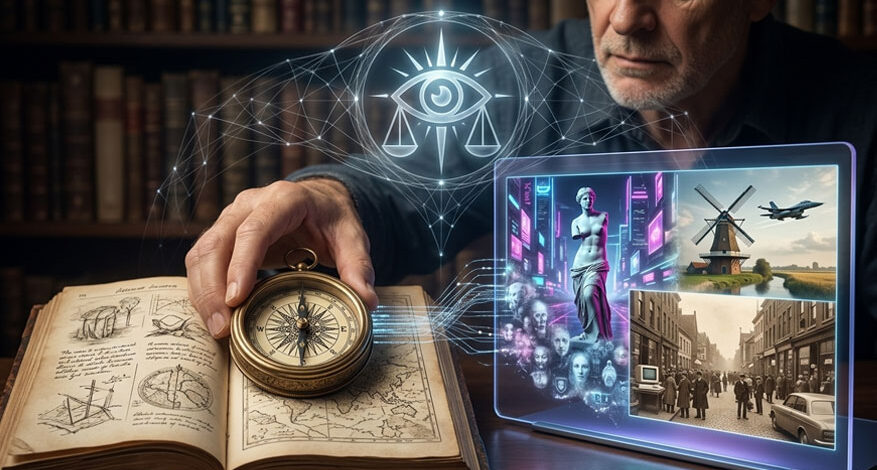
Living for Truth in the Age of AI: Navigating Deepfakes & Ethics
In 1999, The Matrix introduced audiences to a vision of the future that still captivates 25 years later. Morpheus explains to Neo that humanity’s creation of artificial intelligence led to a machine-dominated world, where humans are unknowingly enslaved within a simulated reality. While our present-day AI is far less cinematic, even today’s “mundane” tools—chatbots, image generators, and virtual assistants—have the power to subtly shape how we perceive reality.
The speed at which AI has entered our daily lives is remarkable. ChatGPT, DALL-E, Perplexity, Copilot, and Gemini are no longer experimental technologies; they’re household names. Apple and Google are rapidly integrating AI into devices and services we use daily, while entertainment giants like Lionsgate are exploring AI for content creation. Yet as these tools proliferate, they bring not only convenience but profound questions about truth, ethics, and reality.
AI and the Illusion of Reality
One of the most pressing concerns with AI is its ability to blur the line between reality and fabrication. Tools that once required extensive technical skill, like Photoshop, are now joined by AI systems capable of generating realistic images at scale with minimal effort. The consequences are vast: a photograph can no longer be assumed trustworthy, and even authentic images can be questioned as “deep fakes.”
Sarah Jeong, writing for The Verge, highlights the philosophical stakes of AI-generated imagery:
“The default assumption about a photo is about to become that it’s faked… the impact of the truth will be deadened by the firehose of lies.”
This is not exaggeration. From AI-generated disaster photos to realistic depictions of historic events, the potential to mislead is enormous. As AI democratizes image creation, the collective ability to discern fact from fiction is eroded, leaving society vulnerable to misinformation on an unprecedented scale.
When Truth Becomes Disposable
Political and social contexts illustrate how AI can weaponize doubt. In 2024, North Carolina gubernatorial candidate Mark Robinson attempted to blame AI for compromising content allegedly tied to him, while former president Donald Trump claimed certain images were AI-generated to cast doubt on authentic evidence. Researchers Danielle Citron and Robert Chesney call this phenomenon the “liar’s dividend”—the capacity for AI to give bad actors plausible deniability, even against verifiable facts.
In practical terms, this means that as AI becomes more sophisticated, our instinct to trust our own senses—and even well-documented evidence—can be undermined. Deep fakes, AI-generated political ads, and manipulated images threaten not only personal reputations but the foundations of civic trust. If society becomes unable to distinguish truth from fiction, the very pillars of democracy, justice, and accountability are at risk.
The Challenge for Ordinary Citizens
It’s easy to feel powerless in this new landscape. AI is everywhere: your social media feed, streaming recommendations, automated emails, and even banking systems all rely on it. Yet, while the technology is complex, the ethical challenge is straightforward: how do we stay anchored in truth?
The answer begins with vigilance. Every image shared, every “viral” story forwarded, requires thoughtful scrutiny. As journalists and media consumers alike have discovered, failing to critically evaluate information—even if it seems mundane—can perpetuate falsehoods unintentionally. AI doesn’t replace human judgment; in fact, it amplifies the consequences of inattention.
Faith, Ethics, and Discernment
For those with a faith perspective, these challenges echo timeless principles. Proverbs 4:7 reminds us, “Wisdom is the principal thing; therefore get wisdom: and with all thy getting get understanding.” Discernment—careful, informed judgment—is vital in a world where technology can manipulate appearances and memory. Similarly, stewardship extends to our use of information technology. Ephesians 5:15–16 urges, “See then that ye walk circumspectly, not as fools, but as wise, redeeming the time, because the days are evil.” Being responsible with AI tools—checking sources, questioning anomalies, and prioritizing truth—is a modern expression of this biblical mandate.
AI is not inherently evil, but like any tool, it can be used for good or ill. It can aid journalists in investigative reporting, assist scientists in data analysis, and even help educators create immersive learning experiences. Conversely, it can be misused to deceive, manipulate, and exploit. Recognizing this dual potential is essential for anyone seeking to live in truth rather than illusion.
AI and the Human Element
Despite AI’s capabilities, it cannot replicate the full depth of human experience. Empathy, moral reasoning, and ethical judgment remain distinctly human qualities. AI can mimic, predict, and generate, but it cannot weigh consequences in the same way a thoughtful, informed person can.
Consider the example of AI-generated images of military personnel or police officers. These depictions may look convincing, but they carry no lived experience, no sacrifice, and no ethical grounding. Accepting them uncritically risks eroding our understanding of reality and diminishing the value of human judgment and experience.
Practical Steps for Navigating the AI Era
Living faithfully and wisely in the age of AI requires deliberate effort. Here are practical steps anyone can take to safeguard truth and integrity:
- Verify Sources: Never assume an image, video, or article is genuine. Cross-check against trusted outlets and original sources.
- Exercise Critical Thinking: Ask, Who created this? Why? What is the context? AI can produce anything, but intent and credibility still matter.
- Limit Automation Bias: Tools like AI can recommend or generate content, but humans must always make the final call. Use AI as an assistant, not a replacement for judgment.
- Prioritize Ethical Use: Follow moral and professional standards in creating or sharing AI-generated material. Avoid contributing to misinformation or manipulating truth.
- Educate Yourself and Others: Understand how AI works and share knowledge with your community to build collective discernment.
The Call to Truth in a Digital Age
Ultimately, living for truth in the age of AI is about vigilance, moral clarity, and active participation. Romans 12:2 reminds us, “Do not be conformed to this world, but be transformed by the renewal of your mind, that by testing you may discern what is the will of God, what is good and acceptable and perfect.” In other words, discernment is not optional; it’s essential.
AI can shape our perceptions, challenge our assumptions, and even tempt us toward intellectual laziness. But human judgment, informed by ethics, reason, and faith, remains irreplaceable. As technology advances, our commitment to truth must advance alongside it—anchored in principles that transcend algorithms.
While dystopian fears of AI enslaving humanity may remain fictional, the real risk is subtler: a society gradually accepting illusion as reality. Our task, individually and collectively, is to resist that drift. By remaining vigilant, thoughtful, and principled, we can navigate the AI era without surrendering to falsehoods, ultimately ensuring that truth—not technology—guides our lives.